
by Elaine Caton, Blackfoot Challenge Bird Program Coordinator
I am sitting in a conference room in a Helena hotel, attending the fall meeting of the Western Working Group of Partners in Flight. Partners in Flight (PIF) is a network of over 150 organizations in the Americas that participate in all aspects of landbird conservation. PIF’s simple mission is “Keeping common birds common and helping species at risk through voluntary partnerships.” The working group meetings are hosted by partners in different parts of the Western United States, Canada, and Mexico, and the fall meeting this week is being held in Helena.
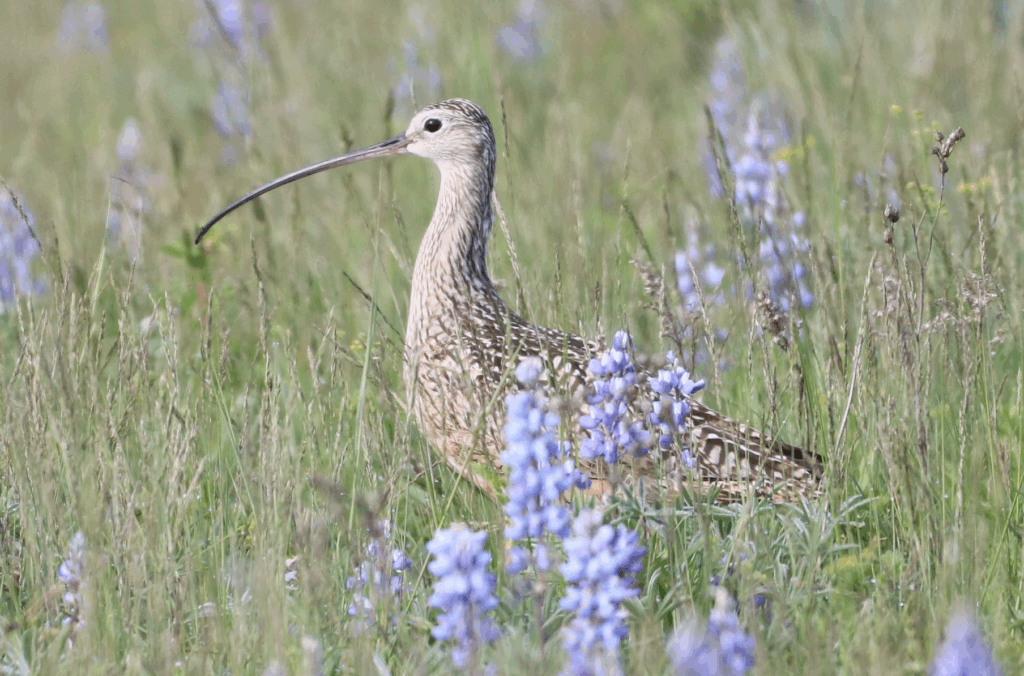
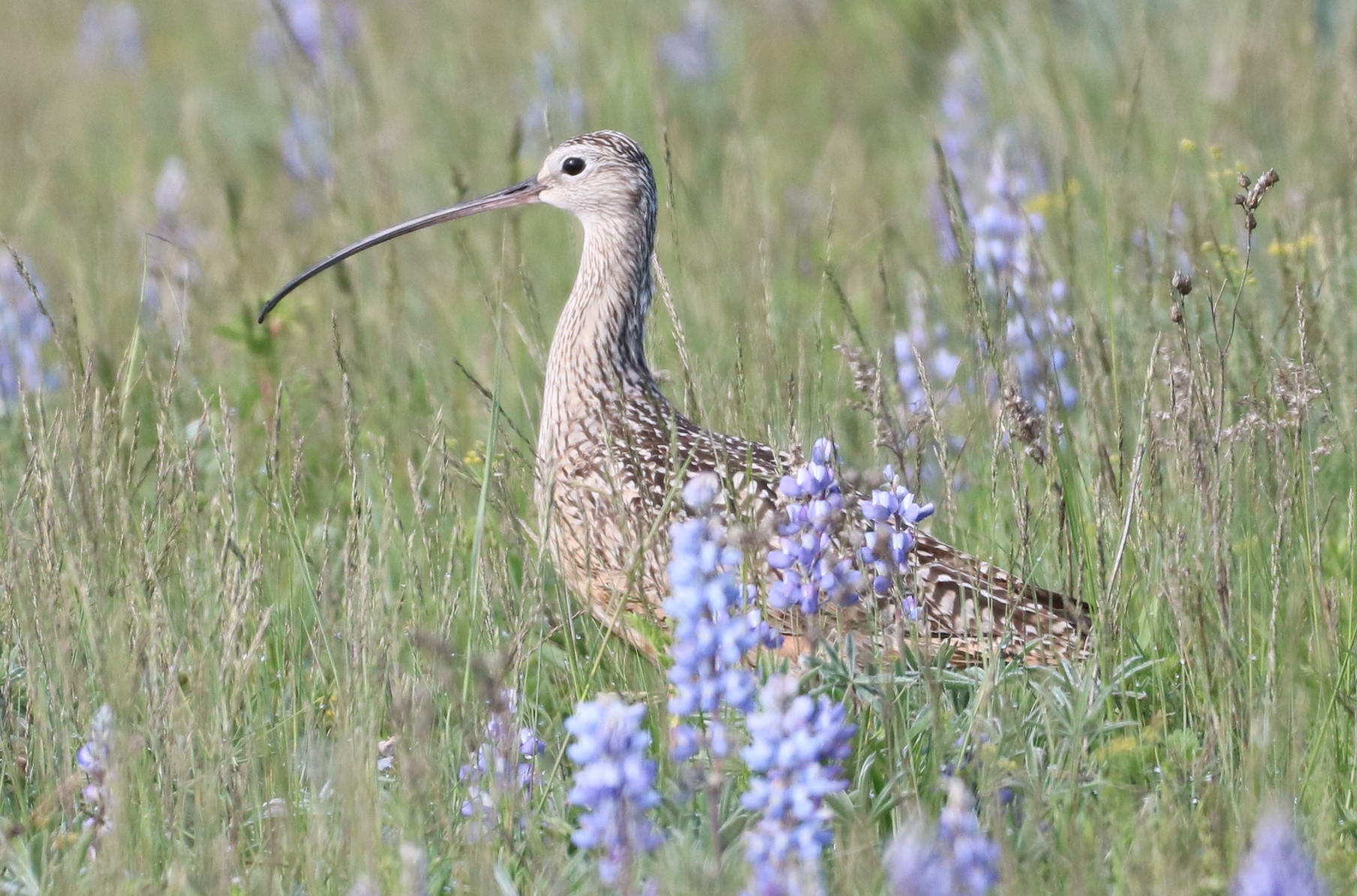
Long-billed Curlew, by Joe Bradshaw
Birds are somewhat unique among most wildlife in that a great number of them migrate long distances every year and so spend significant chunks of their lives in different parts of the world. Some (like most of our trumpeter swans) migrate fairly short distances and might never leave Montana. Species like northern flickers might only migrate down to lower elevations in the valleys for the winter. But many species, including tiny hummingbirds, make incredible journeys to tropical areas in Mexico and Central and South America. So, the survival of many species depends not just on how good we are at conservation here in the Blackfoot, or even in the United States, but also how well conservation works in other countries.
That is why PIF is an international partnership where groups from places like Montana can work with biologists and conservation groups from countries to the south to conserve species that need habitat in both places to survive. When I hear about the clearing of tropical forests in Mexico or the Amazon, I don’t just think about all the amazing tropical birds potentially losing their homes, I also wonder how some of “our” birds, from long-billed curlews to rufous hummingbirds, are faring, and I’m grateful for our partners working in those areas. And I feel a special connection to the ranchers in Mexico who are applying good grazing practices because they care about grassland birds.
The first talks I’ve heard here had speakers and themes very familiar to the Blackfoot Challenge. Presentations by our Migratory Bird Joint Venture partners were all about using non-regulatory, collaborative approaches to work with private landowners, providing support through information and capacity. (Joint Ventures are “cooperative, regional partnerships that work to conserve habitat for the benefit of birds, other wildlife, and people,” are most often run through the U.S. Fish and Wildlife Service.) The Blackfoot Challenge was one organization called out as a good example of the collaborative approach! Research has shown that loss of grassland habitats is much slower in resilient, economically viable rural communities, and so helping to sustain rural communities can help conserve grassland birds. Of course, this has been part of the worldview in the Blackfoot for a long time, but it’s good to know that it’s being supported on a larger scale.
I’ve learned a tremendous amount about new and emerging tools and technologies to monitor birds, share information, and more. I had started to look into the feasibility of using Automated Recording Units (ARUs) to survey birds here in the Blackfoot. These are like an auditory version of the game camera—devices that can be placed anywhere to hear and record sounds that occur within certain frequencies, like bird calls. Many of the conference presentations shared how they’ve been used and how effective they are. One important finding is that ARUs greatly increased the ability to detect rare species. These kinds of meetings are so helpful not just in terms of the information heard, but in making personal contacts with others doing similar work, who can be called on for advice and information that can’t necessarily be found otherwise. Since the meeting took place in Montana, I’m learning from others who work on bird conservation in the state about the species most at risk in our state, where there are gaps in information, and how we can work together to share data and expand knowledge of bird population trends. As I have learned through my own experience, it is much more cost effective and less time consuming to halt or reverse bird population declines before they become threatened or endangered. We are especially lucky in the Blackfoot watershed to have private landowners stewarding grasslands, riparian areas and forests that support vibrant and diverse wild bird populations.